

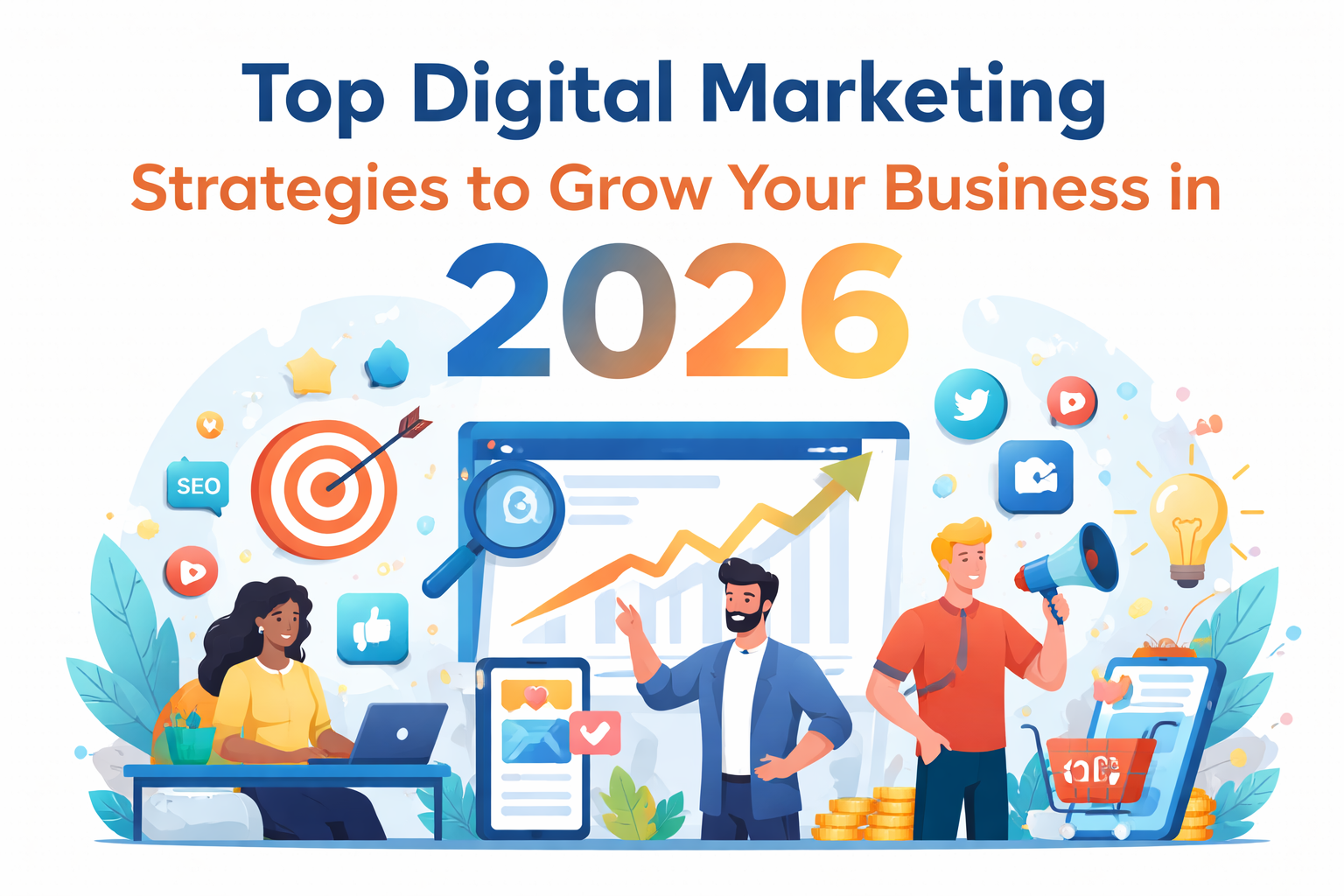
Introduction to Digital Marketing in 2026

Digital marketing in 2026 feels like stepping into a completely different universe compared to just a few years ago. If you’ve been relying on traditional SEO, occasional social media posts, or random ads, you’ve probably noticed something strange—your results aren’t what they used to be. That’s not because your business is failing. It’s because the rules of the game have changed.
Today, customers don’t just Google things and click links. They interact with AI tools, watch short videos, scroll social feeds, and ask chatbots for recommendations. In fact, research shows that AI-driven platforms now influence over 9.7% of B2B and 11.4% of B2C revenue decisions, even before users visit a website . That means your business needs to show up before people even think about clicking your site.
So, what does this mean for you? It means digital marketing is no longer about being visible—it’s about being trusted by algorithms, AI systems, and people simultaneously. The strategies that worked in 2020 or even 2023 are becoming outdated fast. In 2026, success belongs to businesses that understand how to blend technology, creativity, and human connection into one seamless experience.
Let’s break down the most powerful strategies you need right now.
The Shift from Traditional to AI-Driven Marketing
Role of AI in Customer Journeys
Imagine walking into a store where the salesperson already knows what you want, your budget, and your preferences. That’s exactly what AI is doing online. It’s guiding customers from discovery to purchase—often without them even realizing it.
AI is now the first touchpoint in many buying journeys. People ask AI tools for recommendations, comparisons, and reviews before ever visiting a website . This changes everything. Instead of optimizing only for search engines, businesses must optimize for AI interpretation.
Data-Driven Decision Making
Here’s where it gets even more interesting. AI doesn’t just guess—it learns. It analyzes massive amounts of data in seconds and predicts what customers are likely to do next.
According to reports, 80% of marketers feel pressure to adopt AI, yet only a small percentage have fully integrated it into their workflows . This gap creates a huge opportunity. If you can leverage AI properly, you’re already ahead of most competitors.
AI-Powered Personalization
Predictive Analytics
Personalization is no longer optional—it’s expected. Customers want brands to understand them. AI makes that possible by predicting behavior based on past actions.
Think about Netflix or Amazon. They don’t just show random content—they recommend what you’re likely to love. Your business can do the same using predictive analytics tools that analyze browsing patterns, purchase history, and engagement data.
Real-Time Customer Engagement
What’s even more powerful is real-time personalization. AI can adjust content, offers, and messaging instantly depending on user behavior.
For example, if someone visits your website and hesitates on a product, AI can trigger a discount, chatbot message, or recommendation. This creates a dynamic experience that feels tailored and human.
Content Marketing for AI Search
Zero-Click Search Optimization
Here’s a shocking reality: many users never click on websites anymore. They get answers directly from search engines or AI tools.
This is called zero-click search, and it’s growing rapidly. Instead of fighting it, smart marketers are adapting by creating content that AI can easily extract and display.
To succeed, your content must be:
- Clear and direct
- Structured with headings and lists
- Rich in facts and data
AI prefers content it can easily understand and summarize. That means long, confusing paragraphs won’t work anymore.
Short-Form Video Dominance
Platforms Driving Growth
Let’s be honest—attention spans are shrinking. People prefer quick, engaging videos over long text.
Platforms like TikTok, Instagram Reels, and YouTube Shorts are dominating. Businesses that use short-form video are seeing massive engagement because these platforms act like search engines themselves.
Short videos are not just entertainment—they are discovery tools.
Social Media as a Search Engine
Social media is no longer just for scrolling—it’s where people search for answers. Users now look for product reviews, tutorials, and recommendations directly on platforms like Instagram and TikTok.
If your business isn’t optimized for social search, you’re missing a huge audience. This means using keywords in captions, hashtags, and even spoken words in videos.
First-Party Data Strategy
Privacy regulations are tightening, and third-party cookies are fading away. That means businesses must rely on first-party data—information collected directly from customers.
This includes:
- Email subscriptions
- Customer accounts
- Purchase history
Owning your data gives you more control and allows better personalization.
Influencer & Creator Partnerships
Influencer marketing is evolving. It’s no longer about celebrities—it’s about authentic creators who build trust with their audience.
Micro-influencers often outperform big names because they have stronger connections with their followers.
Omnichannel Marketing Systems
Customers don’t follow a straight path anymore. They might see your ad, visit your website, check your Instagram, and then buy later.
Omnichannel marketing ensures a consistent experience across all platforms.
Voice and Conversational Marketing
With the rise of voice assistants, optimizing for voice search is becoming crucial.
People speak differently than they type. Your content should reflect natural language and conversational queries.
Community-Driven Growth
Communities are becoming powerful marketing tools. Whether it’s a WhatsApp group, Discord server, or email list, building a community creates loyalty and engagement.
Automation and Smart Campaigns
Automation saves time and improves efficiency. AI can:
- Optimize ads
- Send emails
- Analyze performance
This allows you to focus on strategy instead of repetitive tasks.
Comparison Table of Strategies
| Strategy | Main Benefit | Difficulty | ROI Potential |
|---|---|---|---|
| AI Personalization | Higher conversions | Medium | High |
| Content for AI Search | Visibility | Medium | High |
| Short-Form Video | Engagement | Low | High |
| Social Search | Traffic | Low | Medium |
| First-Party Data | Control | Medium | High |
| Influencers | Trust | Medium | Medium |
| Omnichannel | Consistency | High | High |
| Voice Marketing | Accessibility | Medium | Medium |
| Community Growth | Loyalty | Medium | High |
| Automation | Efficiency | Low | High |
Common Mistakes to Avoid
Many businesses fail not because they don’t try—but because they focus on the wrong things. One major mistake is relying too heavily on old SEO tactics. Another is using AI without a clear strategy.
Also, ignoring data is a huge problem. Data is the backbone of modern marketing. Without it, you’re guessing.
Future Outlook of Digital Marketing
Looking ahead, digital marketing will become even more AI-driven. Reports suggest that 90% of online content could be AI-generated by 2026, making originality and trust more important than ever .
At the same time, companies are investing heavily in AI-powered advertising and personalization, with massive growth in digital ad spending expected .
Conclusion
Digital marketing in 2026 is not about doing more—it’s about doing smarter. The businesses that win are those that adapt quickly, embrace AI, and focus on real customer experiences.
If you take one thing away, let it be this: technology is changing fast, but human connection still matters most. Combine both, and your business won’t just grow—it will thrive.
FAQs
1. What is the most important digital marketing strategy in 2026?
AI-powered personalization is one of the most important strategies because it directly improves customer experience and conversions.
2. Is SEO still relevant in 2026?
Yes, but it has evolved into AI-focused optimization and structured content for visibility.
3. Why is short-form video so effective?
It captures attention quickly and aligns with how users consume content today.
4. How can small businesses compete in 2026?
By using AI tools, focusing on niche audiences, and building strong communities.
5. What role does AI play in marketing?
AI helps with automation, personalization, analytics, and decision-making.